50: The Oldest Evidence for Life?
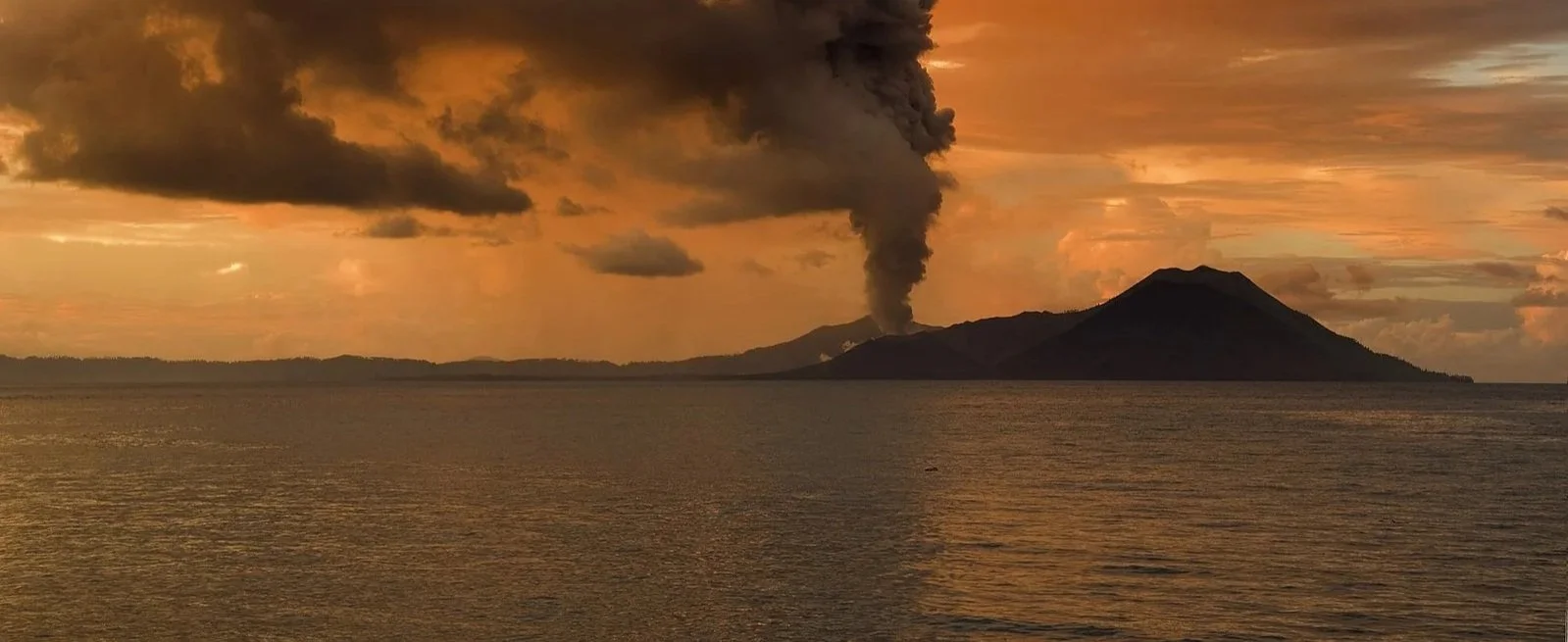
Morning comes to the Earth, 3.7 billion years ago. A faint young sun creeps over the horizon, barely illuminating the world below in a dull twilight. On the other side of the sky, the moon dips down into the sea, slightly larger than we’re comfortable with. We hover over a vast dark oceanscape, waves stretching all around. The early morning rays catch the top of a volcanic island far in the distance, gently billowing steam. But we’re headed underwater.
The water is dark and deep, but there’s no need to fear. No sharks, no squid, no sea monsters lurk in these depths. The largest critters here are smaller than a speck of dust. If we shrink down in size, we can see them swimming around: bacteria- some long and thin, others like squat round balls, others making even stranger shapes. Surrounded by these dancing cavorting critters, we notice one slowly sinking to the seafloor. This poor little bacteria has perished, and is heading where all dead things in the sea go: the bottom.
After it touches down, this bacterial corpse is covered in layers of silt and mud. Over time, the cell gets buried deeper and deeper underground, and the mud begins to turn to stone. Over 3.7 billion years, this stone is squeezed, baked, twisted underground, then shoved back onto the surface. Sitting under a much brighter sun on a much colder world, the stone will eventually be picked up by a strange, large creature with hands, tools, and a warm orange overcoat. This human creature is a distant grandchild of that old bacterial cell. The human knows how old the rock is, and knows the rock once saw bacteria dance beneath the waves billions of years ago. The question is: is that tiny old corpse still left inside?
Does this rock hold any evidence of ancient life?
We’ve searched for Earth’s oldest fossils since Season 1. So far, we haven’t found anything concrete, no proof that everyone agrees on. To be fair, Earth hasn’t given us a lot to work with. Many rocks we’ve seen never held life at all. Think of lava flows- no chance of life, no chance of fossils. Some rocks we’ve seen might have held life, but they’re too altered to hold fossils, pressure-cooked beyond recognition. Once in a while, we see a faint sliver of hope: a hint of carbon, a funny-looking crystal. But on closer inspection, our hopes are dashed, and we return to the drawing board. It’s beginning to seem hopeless.
Today, that all begins to change: a new fossil frontier lays wide before us, on the frozen tundra of southwest Greenland. We’ve been hanging around Greenland for 14 episodes, and I can already hear folks saying “Ugh, can we go somewhere else, please?” And we’re almost done, I promise. This Greenland arc is like a Russian nesting doll, or an onion. We started large and have been zooming in, layer by layer, each step smaller, younger, and more well-preserved. This whole time, I’ve been hinting at better things to come.
Now, in these final episodes, we’ve hit the smallest layer of the nesting doll, the core of the onion, if you will. These rocks are the youngest and freshest we’ve seen on the show: 3.7 billion years old, or March 11 on our imaginary Earth Calendar. More importantly, this is the largest stretch of ancient seafloor we’ve yet seen. If there is any place on Earth to find the oldest fossils, surely this is it. Over 50 years, many scientists have arrived here pursuing that quest. We’ll divide their efforts into three episodes, starting with the smallest chemical traces, and ending with clues you can see with the naked eye. Let’s begin.
Part 1: A Hopeful Start
Our story begins in 1971, at a remote iron mine on the edge of the Greenland ice sheet, an area called Isua, that’s I-S-U-A. The mine flew scientists all the way to Isua, 100 km away from the nearest settlement. The researchers quickly realized just how old and how well-preserved this area was. Isua would revolutionize the study of Earth’s earliest days, and it’s been the focus of the last few episodes. If you want more details on this discovery, check out Episode 43. The iron mine closed after a few years, but the scientists kept on coming. The first visitors instantly knew the treasure trove on their hands. They knew these rocks could hold fossils. There was one huge problem: none of these guys were experts on ancient life. And so, these field researchers hammered out samples from Greenland, and shipped the rocks to paleontologists and organic chemists across the world.
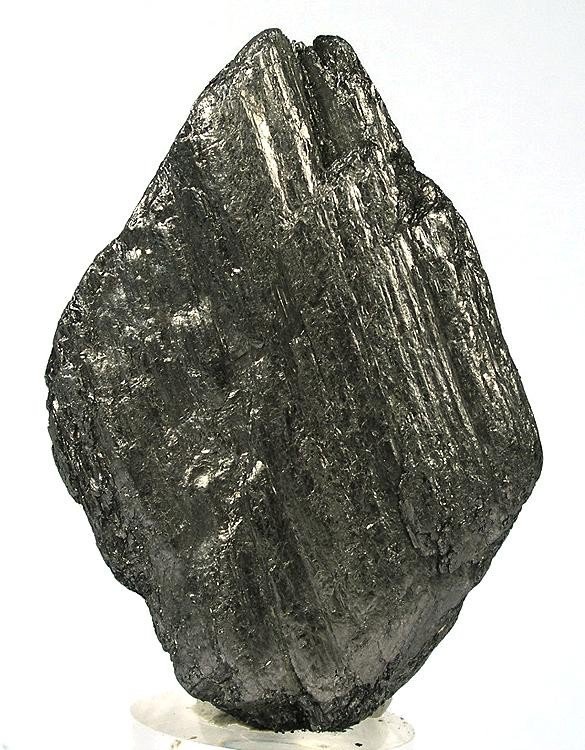
The first clue for ancient life was quickly found by everyone. The researchers didn’t find tiny, perfectly preserved bodies of bacteria. They didn’t find fossilized layers of pond scum. They certainly didn’t find any bones or teeth or shells. This first clue was a mineral, a crystal we’ve seen many times since Season 1. That mineral is graphite.
We covered graphite in detail in Episode 42, elsewhere in Greenland. Here’s a 30 second summary, and why it’s so important for ancient life. Graphite is a shiny black mineral that leaves dark marks on your hands or paper. Graphite is made of pure carbon, just like a diamond. Graphite also needs heat and pressure to form, just like a diamond, but it doesn’t need as much. This makes graphite much more common than diamonds- most pencils you use have graphite inside. Sometimes it’s called “pencil lead”, but it’s not lead, it’s carbon. That point is important, because living things like you and me, like bacteria and Bruce Springsteen, are also made from carbon. If you find a rock with a lot of carbon-rich graphite inside, it maybe had carbon-rich life once upon a time.
That word “maybe” is key to this episode. If graphite only came from life, then we’d be popping the champagne, celebrating Earth’s oldest fossils. But if there are alternatives, we need to be rigorous. Speaking of which, let’s return to the 1970’s. By 1979, everyone agreed that there was carbon-rich graphite in Greenland’s ancient rocks, 3.7 billion years old. But they did not agree on the graphite’s origins- if it came from life, or not.
We don’t have time to go over every single paper over 50 years, but we can broadly lump these arguments into two recipes: the fossil recipe that needs life, and the alternative recipe that doesn’t. Let’s start with the fossil recipe: how can we turn a living creature into a few dark shavings of graphite?
To explain this recipe, let’s return to our poor dead bacteria from the cold open, sitting on the ancient seafloor. The bacteria once had a rich life, searching for food, escaping viruses, but now, it’s just a tiny sack of atoms and chemicals. Most of those atoms are carbon, linked in intricate patterns, forming chains of DNA and tough outer shells. Immediately after death, these beautiful structures begin to break down, and the cell decomposes.
As the dead bacteria is buried, it gets pressure-cooked. The deeper the body goes, the greater the pressures and temperatures. The body continues to degrade. Fragile DNA breaks apart, and even the tough outer shell disintegrates. Eventually, all that is left is pure carbon: the simple building block of life, with no trace remaining of the life that once was. It’s like dismantling a house into a pile of bricks- you can tell a building was here, but not much else.
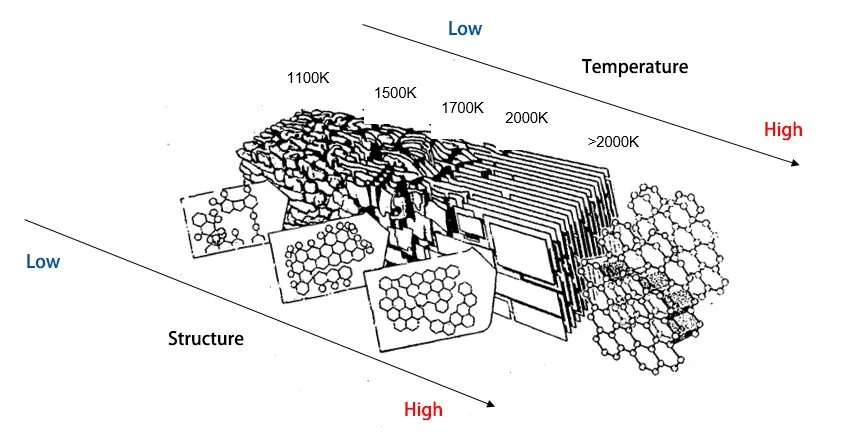
How organic material turns into graphite, from March & Griffiths 1982, Int’l Symposium on Carbon
If you squeeze that pure carbon hard enough, it will crystallize into dark black graphite. There’s no cell, no DNA, no body parts left from the original critter. But there is one clue that remains, one that can’t be completely destroyed during burial. The clue is in the carbon atoms themselves. Even if the physical body is destroyed, the chemistry can still tell us that life was here.
Not all carbon atoms are the same. Some are heavier, and some are lighter. These different carbon flavors are called “isotopes”. We’ve talked about isotopes many times on the show. Here’s the short story. Everything that’s made of carbon has a different mix of light and heavy isotopes. For example, living creatures have a lot of light carbon, while non-living materials are usually made of heavy carbon isotopes. Here’s how I remember this. If I asked you to carry a dozen light apples or a dozen heavy watermelons, which would you rather carry? I’d bet you’d choose the lighter apples. In a similar fashion, living cells prefer to work with light carbon atoms. For better or for worse, life is lazy.
Let’s bring this idea back to our ancient bacteria. The bacteria is full of light carbon atoms, just like you. Those carbon atoms stick around when the bacteria dies, decays, and even when it’s pressure-cooked into graphite crystals. In short, if the ancient Greenland graphite came from living creatures, it should have the same carbon signature as living creatures.
Which brings us back to the 1970s. The science community was on the edge of their seats. Many ancient rocks from Isua, Greenland had graphite crystals inside, pure carbon, the stuff that life is made of. But did that graphite come from life? What did the isotopes say?

Manfred Schidlowski, first to claim life in ancient Greenland.
In 1979, a team from Mainz, Germany made an announcement. They found graphite in 13 Isua rocks, spread across a few miles of Greenland tundra. On average, the graphite crystals had light carbon isotopes, approaching values you would expect in a living creature, like an ancient bacteria. Break out the champagne, we’ve finally found the oldest fossils! Well, if you know this show, you know we must look closely before we break out the drinks. We want to make sure our party is well-earned.
The German team was led by Manfred Schidlowski. He’s a character that will appear in many seasons of the show, I’ll have to do a biography of him some day. Manfred would write many papers on Greenland graphite from the 70s to the 2000s, all of them strongly arguing for life. Manfred was firmly on team fossil. But Manfred had a little problem, a strange wrinkle that needed explanation.
When I described Manfred’s first discovery in 1979, I was very careful with my wording. I said the Greenland graphite had light isotopes, approaching values inside living things. In other words, the values were close to life, but not exact. Does this mean we throw the whole dataset out, that there was no chance of life? Manfred thought he had an easy answer. To visualize this answer, let’s return once again to our poor bacteria on the seafloor.
Last we left, our bacteria was dead, buried, and turned into black graphite crystals. In a perfect world, that graphite should have the same carbon signature as the original bacteria. But if you keep squeezing and cooking this graphite underground, even those carbon atoms begin to change. The lighter atoms leave, while heavier carbon from surrounding rocks percolates in, like water into a sponge. Over time, the last chemical signatures of life, the hardiest fossil clues, are obscured and then obliterated.
I’ve been hyping these Greenland rocks as “the most well-preserved we’ve seen”, and that’s true, but they’re still 3.7 billion years old. They’ve still been through the ringer, cooked at hundreds of degrees for millenia. According to Manfred, this cooking has altered the Greenland graphite, has messed around with any fossils. The carbon signature isn’t exactly the same as life, but it’s close enough given everything that’s happened to the rocks.
There are other pillars to Manfred’s argument, but that’s the basic idea. To him, Greenland graphite is the final fossilized remains of ancient bacteria. It doesn’t look like much: just a few flecks of black crystal, like a broken pencil tip, but it would still count as the oldest evidence for life on Earth.
This episode still has a lot of time left, so you can guess that there’s more to the story. There are alternate recipes for the Greenland graphite, recipes that don’t require life. Let’s hear them out, and see what idea makes most sense, even if it means no fossils.
Part 2: A Vein of Truth
Before we learn what this alternative recipe is, I need to describe the pushback against Manfred’s fossil paper. From the beginning, even before 1979, many scientists were skeptical. They didn’t think the graphite came from ancient fossils. Every few years, a paper would pop up with a new dataset or a new potential recipe. In turn, Manfred would respond with his own papers that briefly addressed these concerns, but basically returned to his original point: the Greenland graphites had light carbon, therefore they were made by life. Yes, they were altered, yes they were heavier than you’d like, but that’s to be expected from very old rocks. To Manfred, the graphite crystals were fossils, plain and simple.
This stalemate continued for decades, until finally, in 2002, one paper blew the whole argument wide open. This paper was published in the journal Nature, the highest place a geologist can go. People sat up and took notice. The main author on this 2002 paper is a good friend of mine. He was my boss for two years in France, and genuinely one of the nicest people I’ve ever met. I’ve been waiting to introduce him ever since we started our Greenland expedition. Folks, I’d like you to meet Mark van Zuilen.

Mark van Zuilen, who questioned previous evidence for Greenland life
Mark is currently a senior researcher at the Naturalis Biodiversity Center in Leiden, in the Netherlands. When I first met him, he was working in Paris, France, but that’s not where we met. Our first encounter was actually on a field trip in South Africa, looking at rocks 3.2 billion years old. For reference, we’ll see these rocks very soon in Season 3. I was just finishing my PhD and looking for a job. Mark was starting a new project, and was looking for a young researcher. I still remember our first lunch together, surrounded by the scrubby hills. We instantly clicked. In a few minutes, we crafted a research project. In a few months, I was working in Mark’s Paris lab. I’ll talk about my research with him eventually, but for now, let’s return to the Greenland story, to Mark’s story.
In 2002, Mark was a young grad student, working at the Scripps Institute in San Diego. His project was examining ancient Greenland graphites, the same ones that Manfred Schidlowski swore were fossils. To solve this debate, Mark collected rocks from around southwest Greenland. Some were the same rocks Manfred had grabbed in the 70s. Others were freshly-picked. After looking at evidence from the field, the microscope, and chemistry, Mark’s paper was very clear: most Greenland graphites did not come from life.
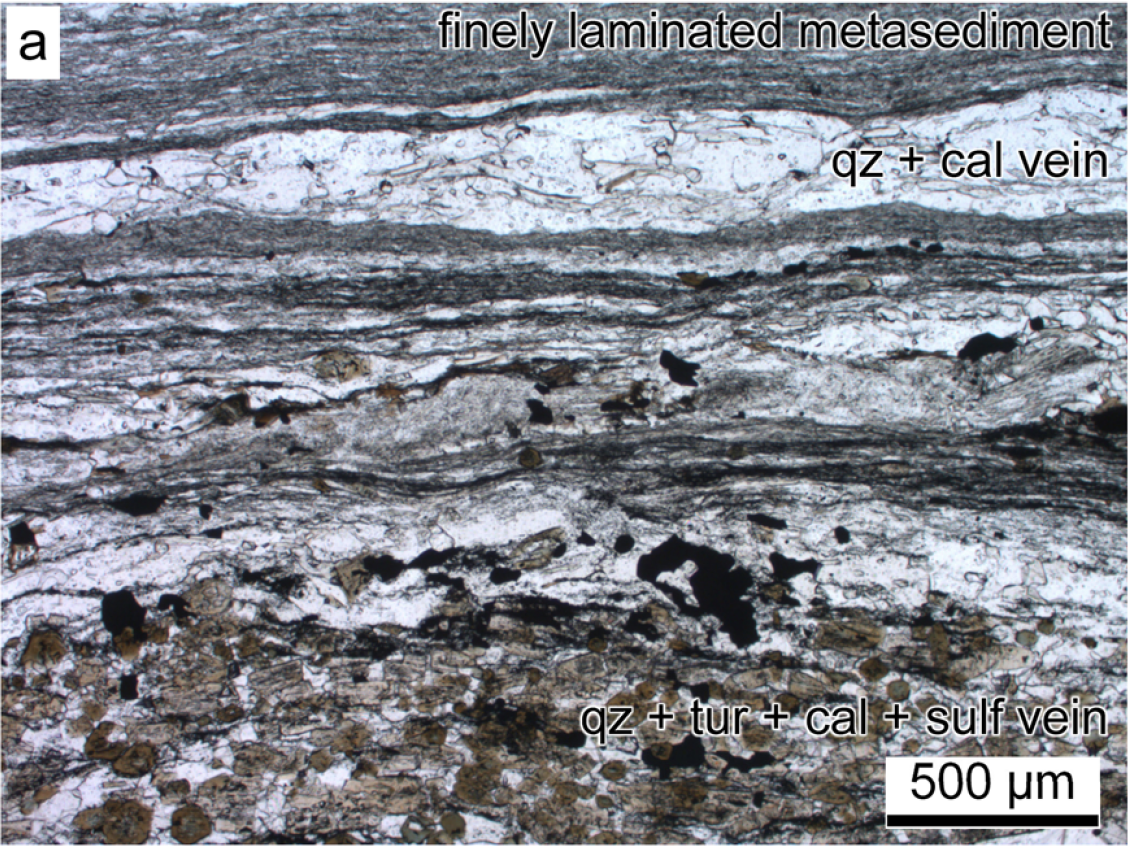
3.7 billion-year-old Greenland rock with veins mimicking original layers, from Harding et al., 2025, Nat. Comms. Earth & Environment.
The argument comes as a one-two punch. First, let’s talk about alteration. Whether you were on team fossil or team skeptic, everyone agreed the Greenland rocks were messed up. But Manfred had unwittingly sampled the most altered areas. I want you to imagine a cracked rock. Now imagine those cracks are filled in with cement, or spackle, or plain old dirt. You’ve probably seen a stone like that, especially in fancy buildings- fractured rocks make beautiful floor tiles or columns. In geology, we call these cracks “veins”, because they look like skinny, snaking veins you see in your arm. Perhaps you’ve heard of a vein of gold- that’s just one example.
If you want to learn about the original rock, you want to avoid these veins. Veins tell you how the rock was altered, but not how it was made. It turns out, most of Manfred’s graphite samples, his supposed fossils, came from veins. These crystal-filled cracks formed under intense heat and pressure, hundreds of degrees hot, not great for life. That might seem like a huge mistake on Manfred’s part, but to be fair, these cracks can be hard to spot in very ancient rocks. Let’s re-imagine that cracked stone riddled with crystal veins. Now let’s keep squeezing and stretching that poor rock underground like silly putty or bread dough. Eventually, the fresh, sharp cracks get blended in with everything else. It can be hard to separate vein from original rock, especially given the gear and techniques in the 1970s. Finally, despite all of Manfred’s papers on Greenland, I don’t think he actually visited the place. His work was important and cutting-edge at the time, but it was lab-focused. I don’t mean to rag on him this episode, he will have more successful ventures in future seasons.
So, if the graphite was in super-cooked veins, if it wasn’t life, how did it get there? Fortunately, grad student Mark had a recipe.
In our original fossil recipe, we took a bacteria and squeezed it into simple graphite, pure carbon. In Mark’s alternate recipe, all we’re doing is replacing the first ingredient. Instead of carbon-rich life, we can substitute other carbon-rich materials. Like what? There’s a family of rocks we’ve met on the show multiple times, rocks that are chock-full of carbon. The most famous example is limestone, and we’ve recently met its’ bratty sister dolomite. If you squeeze cracked veins of limestone or dolomite hard enough, in just the right way, you can make graphite. No life required. (A side note for hardcore rock nerds: the veins Mark was looking at weren’t limestone or dolomite, but a third sister in this rocky family. We don’t have time to discuss her today, but she deserves a brief name drop. Her name is siderite, and she will show up in future episodes. For simplicity today, I’ll lump siderite and her more famous sisters into the big “limestone family”.)
In short, Manfred’s dream of Earth’s oldest fossils had been crushed. The carbon-rich graphite was made as rocks were buried underground, in crystal veins too hot for any life. Instead, members of the limestone family had been squeezed into pure carbon: a mimicry of life, but not the real thing. One final nail in the coffin: Mark’s new data showed that the carbon isotopes in graphite was much heavier than in bacteria, or any other living thing. After two decades of Greenland work, Manfred did not have a rebuttal, and moved on to other fields. But again, don’t worry- he’ll have his day eventually.
Once again, our hopes are dashed. Another day, another cautionary tale, and no fossils yet. But, unlike other episodes, there is a silver lining. In Mark’s landmark 2002 paper, he mentions one location where there might be a chance, a hope of finding real fossil graphite. A place where there are no veins cracking through samples, a place where no member of the limestone gang can mess anything up. Where is this spot, who found it, and is it still viable today?
Part 3: Party Like It’s 1999

Minik Rosing, with perhaps the best evidence for Earth’s oldest fossils.
We’ve been covering Greenland for many episodes, and many players have come and gone. New Zealanders and Australians, Americans and Germans, and many more. Our last person for today is a true Greenlander, and so it makes sense that he might just have the most important discovery of them all.
Minik Rosing was born in Greenland’s capital of Nuuk in 1957, about 100 km or 50 miles from this episode’s rocks near Isua. Greenland was in his blood: Minik’s ancestors included both Inuit Greenlanders and Danish immigrants. His life was spent between reindeer farms in the Arctic, and schooling across the ocean in Denmark. By the 1990s, he was working at the Geologic Museum in Copenhagen, which has excellent exhibits for tourists if you’re ever in the area.
Minik had already gotten his PhD and had published 20 papers on Greenland. He was an expert on the Isua region, our stomping grounds for the last few episodes. For example, in 1996 he discovered that many limestone rocks in the area were actually cracked veins instead of ancient seafloors. Hopefully that rings a bell: it was a critical piece of evidence in my old boss Mark’s paper in 2002 from last section. But in our story, 2002 is a few years in the future. The year is 1999, and the world is about to change. Not from Y2K, but from a paper by Minik Rosing.
Minik’s paper came out in the journal Science, another top-tier journal for geologists, so folks paid attention. What did he find? Just like Manfred in the 1970s, Minik found tiny crystals of graphite on ancient seafloors, slivers of pure carbon. These crystals were just a few microns long, the size of bacteria. Just like Manfred in the 1970s, Minik also found light carbon isotopes, close to life, though not exact.
I can already hear you shouting through the airwaves. Wait a minute, you say, this is the same evidence we saw before! The same kind of evidence that was shot down by Mark in 2002? How do we know this is the real deal? Why is this spot OK, and not others? Now you’re asking the right questions. Manfred’s data from the 70s and Minik’s data from the 90s are basically laying out the same argument. The difference is where they got that data.
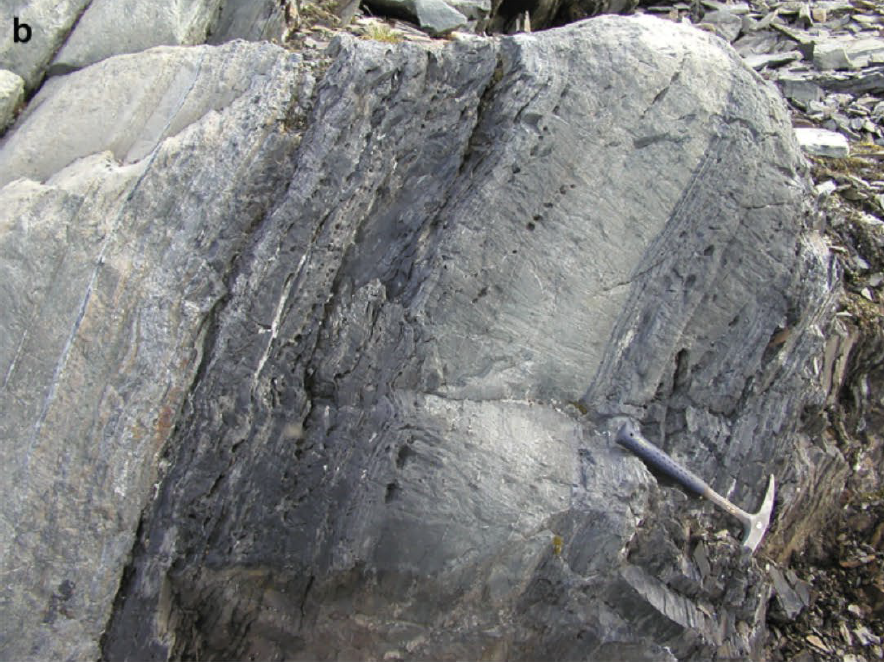
Layers of seafloor 3.7 billion years old, with possibly Earth’s oldest fossils. Minik Rosing’s 1999 location, from Harding et al., 2024, Scient. Reports.
Let’s compare. The old 1970s data came from cracks and veins. These cracks do not represent ancient seafloors, but instead boiling conditions deep underground, too hot for life. In contrast, Minik found a much better slice of rock in 1999. He could see flat, gentle layers just like mud and clay on modern seafloors. He even saw where mudslides had disturbed the silt before returning back to normal. In short, truly some of the best-preserved rocks of their age. The carbon-rich graphite was only found in this ancient mud, not in any cracks or veins. One point for Minik.
OK, so we have graphite that formed on the seafloor. Great. We just learned that graphite doesn’t have to made by squeezing life, it can be also made by squeezing members of the limestone family! What does Minik have to say about that? This answer is simple: Minik’s 1999 location doesn’t have any member of the limestone family around. And even if it completely disappeared, it would leave other chemical footprints for us to find. In short, this slice of ancient seafloor had no member of the limestone family around. No limestone siblings means no carbon for any non-living graphite recipes. Two points for Minik.
All right, I’m almost convinced, but there’s just one more point. What about the carbon isotopes, the chemical signature of life? How do those compare between the old debunked 1970s data and Minik’s new 1999 location? OK. To explain this one, I need to throw a couple of numbers your way- a few isotope values. I’m not going to trouble you with units, that’s a conversation point for another day. Instead, I’m going to use musical tones for each, so you can visualize them like points on a chart, or notes on a music sheet. Low notes are low numbers, high notes are high numbers.
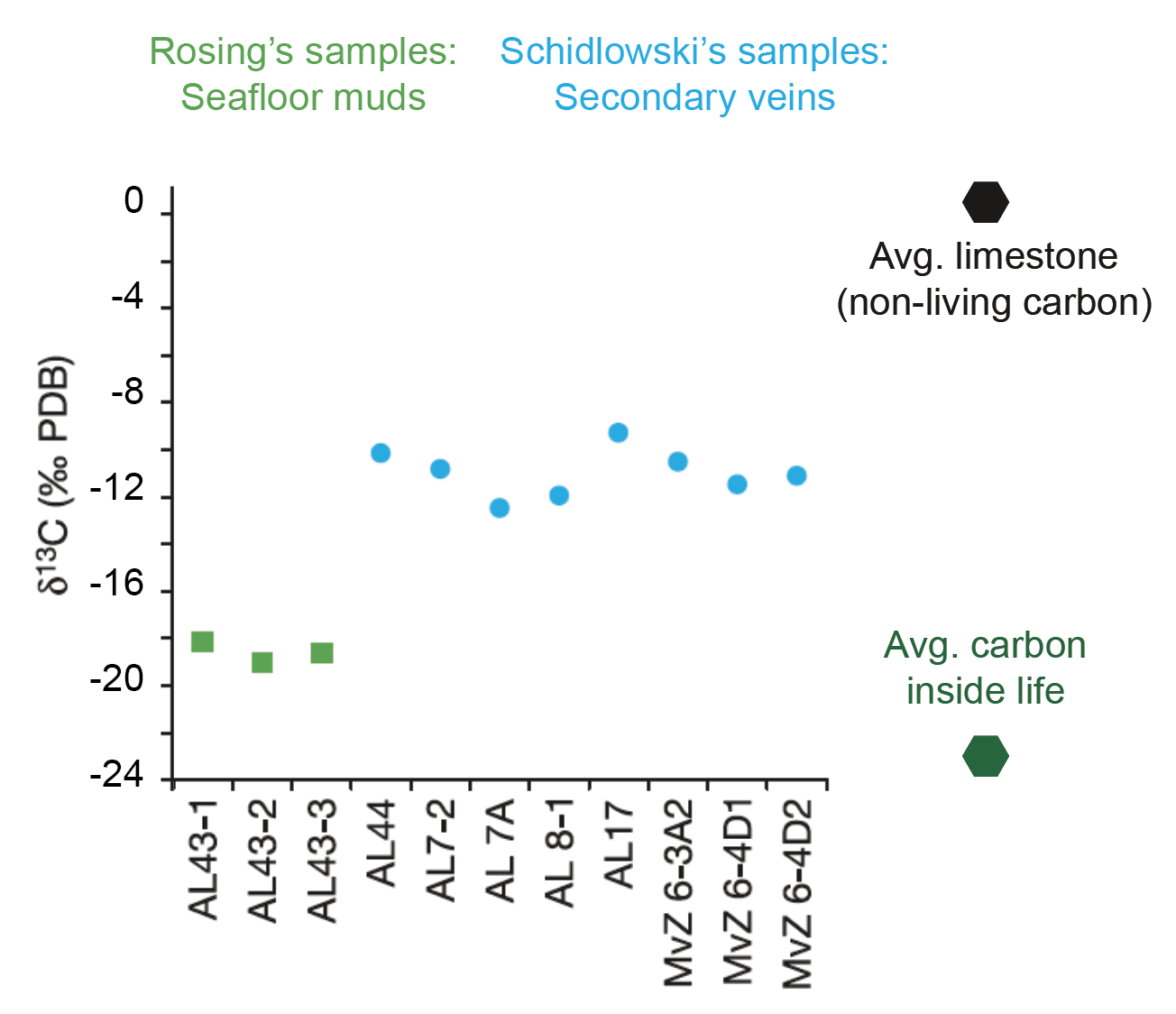
Carbon isotopes in Minik’s and Manfred’s samples, modified from van Zuilen et al., 2002, Nature. Note how much closer Minik’s samples are to life.
Life’s carbon signature is very low, -25 on average, because life likes to gobble up light carbon. In contrast, non-living limestone is around 0, much higher than life. In short, the lower your number, the more likely your graphite came from life. The higher the number, the less likely. Now let’s start with the old 1970s data. On average, this janky carbon was around -12, about halfway between living and non-living, not terribly convincing. Now let’s compare with Minik’s new data from 1999. This carbon is -20, well within life’s realm.
I would call that three out of three points for Minik. His Greenland rocks are from ancient seafloors, the perfect place to find life. The rocks have no evidence for the limestone family, which could make carbon-rich graphite without life. And finally, the carbon in his rocks has a similar signature to living things. It sounds too good to be true, what’s the catch?
I’m going to pull the curtain back for a second. When I started this episode, I fully expected to find a serious rebuttal, a major challenge to Minik Rosing’s 1999 paper. It’s one of the reasons this episode took an extra week to finish. Surely, by now, someone would have picked the evidence apart, found something glaringly wrong. But as of 2025, more than a quarter-century later, no real challenger has emerged.
But Dylan, you may ask, why do you sound so surprised? You’re an expert in ancient life, shouldn’t this date, this paper be engraved into your brain? Yes and no. My expertise in ancient life starts a little later, when we begin to see visible fossils of pond scum, stuff you can see with the naked eye. In my circles, we don’t usually talk about confirmed, definitive fossils until Season 3, a few weeks from now on the Earth Calendar. Whenever we talk about this Season 2 stuff from Greenland, it’s always hand-wavey: it might be life, it’s not confirmed, heavily debated, or just downright wrong. Without reading it in detail, the Rosing paper blended into the huge pile of evidence that would inevitably be proven wrong, sooner or later. It goes to show that even scientists can suffer from tunnel vision.
One point in my defense: as solid and important as Minik Rosing’s 1999 paper is, it has been cited far less than other debates we’ve discussed. In Episodes 16, 33, and 42, we looked at debated fossils from Australia, Canada, and elsewhere in Greenland. These papers have around 100 citations every year, 2 every week, incredible for geologists. BUt in my opinion, I’m not extremely convinced by those examples- check out those episodes for more detail. In contrast, Minik’s paper is only cited 30 times a year, a third of those others.
One reason might be: less debate, fewer publications, less sniping back-and-forth. Possibly, but on the other hand, I haven’t seen a concerted, unified effort to label this specific location as Earth’s oldest evidence for life. There’s so much noise from the other contenders that it’s hard to pick this spot out. But that appears to be changing. A few recent papers have returned to Minik’s fossil spot, not to tear his argument down, but to build it up with new evidence. Two papers have just come out in the past year, we’re talking cutting edge stuff. Now that we’ve finally introduced this critical location in Earth history, it’s time to see what the latest science has to say. That will be the subject of next episode.
One last quick thought before the summary. After researching and writing this episode, where do I sit on the Minik Rosing paper- is it the oldest evidence for life on Earth? To be honest, I’m far more persuaded than I was expecting. The fact that the cutthroat world of early Earth geologists haven’t yet struck the idea down is impressive. I’m going to hold judgment until I read these newer papers, so I’ll get back to you next episode. But let’s not forget the cautionary tale of Manfred Schidlowski in the 1970s. Any idea can get torn down if the right evidence comes along. The story still continues.
Summary
It’s easy to want a simple answer to life’s big questions. What will I be when I grow up? How can I make the world a better place? Or in this case: what is the oldest fossil on Earth? But such big questions rarely have simple answers. Time and again on this show, we’ve seen exciting contenders shot down with new evidence, or debated so heavily that they may never be conclusively proven.
Nowhere is this more apparent than the ancient rocks of Greenland, 3.7 billion years ago, mid-March on the Earth Calendar. Everyone agrees that life was present during this time, but what, if anything, remains? Bacteria might have been ground down into graphite crystals of pure carbon, or perhaps those crystals had nothing to do with life. Today, I’ve covered just three stories of many: the pioneering carbon work of Manfred Schidlowski, the strong rebuttal from my old boss Mark van Zuilen, and a paper from Minik Rosing that still stands the test of time. Next episode, we will follow up on Minik Rosing’s work, since it is the strongest evidence yet for life on an ancient Earth. What does the latest research say? Stay tuned to find out.