55: The Oldest Rock in the USA
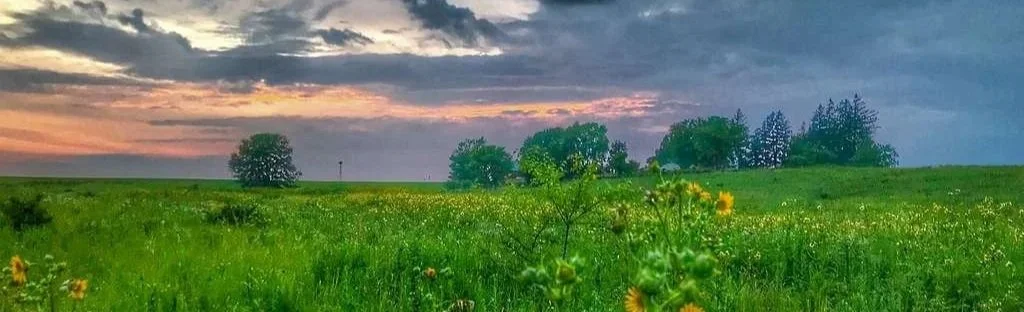
Imagine yourself in a car, driving across the Great Plains of North America. The landscape is either flatter than a pancake, or gently rolls up and down like swales on the sea. Either way, it’s tempting to drift off on such a road. Fields of corn follow fields of wheat follow fields of lumbering hay bales. Patches of trees start as dark smudges on the horizon, quickly passing by in a flash of shaded green, then disappearing in your rear mirror.
Just as your eyes grow heavy and you’re desperately searching for a radio station or science podcast to stay awake, the road dips and curves into a wide river valley, more forest than prairie. Finally, a change of scene. A green sign welcomes you to Granite Falls, Minnesota, population 2,897. Shortly after, you see a sign for the county museum, sitting next to a rare sight on the plains: cliffs and ledges of pink, gray and yellow rock. Seems appropriate for a town named Granite Falls.
Maybe you’re a sucker for local flavor. Maybe you just really need to use the bathroom. Either way, you pull up to the museum, a red ranch covered in vivid murals. Stepping out, you walk by a historical marker, surrounded by low, dark, moss-covered rocks. You pause and do a doubletake. In gold lettering on a black background, this sign starts with three words you did not expect to see today: WORLD’S OLDEST ROCK.
This sign is no longer true, but it still tells a fascinating story.
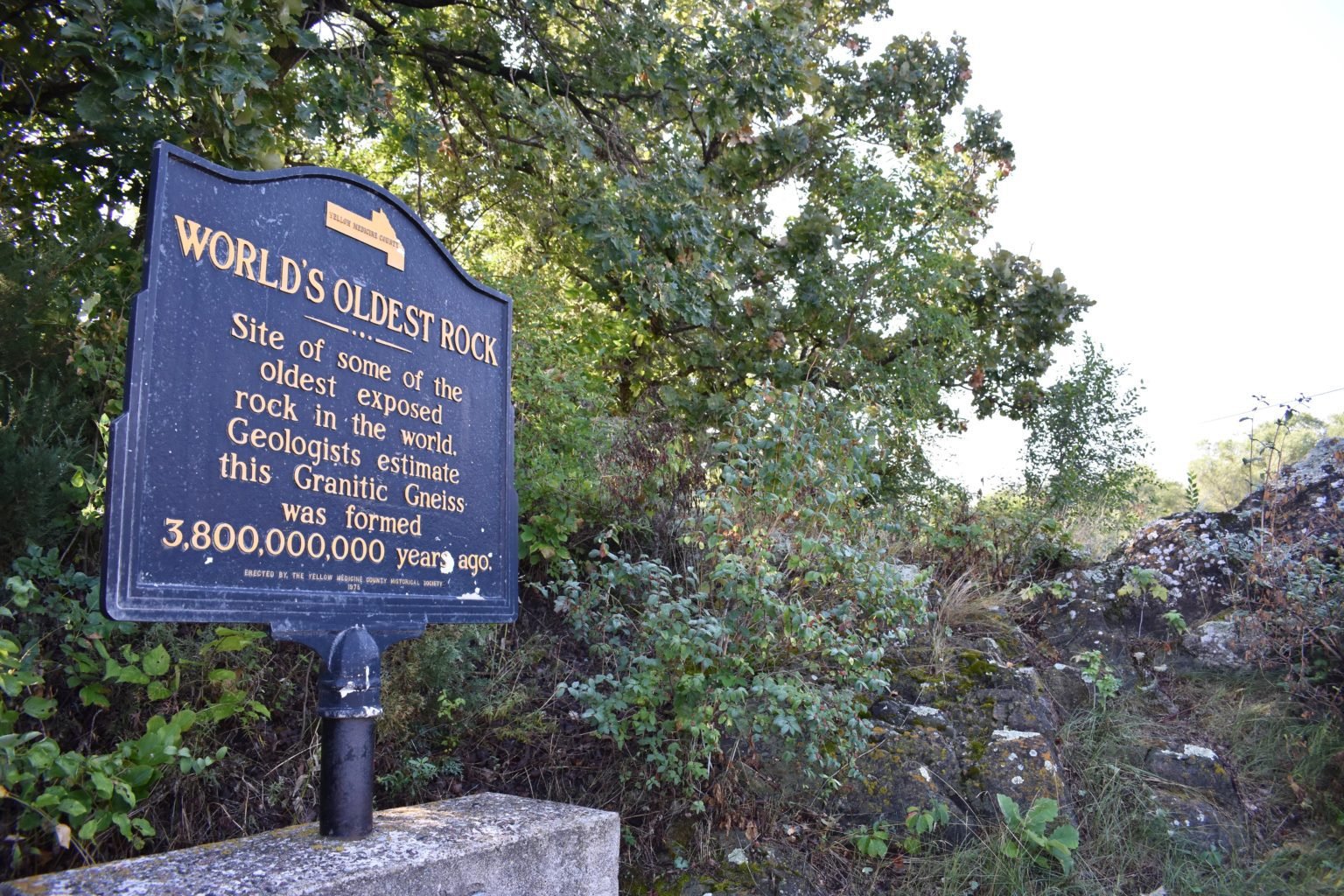
The sign in Granite Falls, Minnesota, proclaiming what was once Earth’s oldest rock. From mnrivervalley.com
Welcome to the Season 2 Finale!
We’ve finally reached the end of the Eoarchean Era, the second chapter of Earth’s history. The Eoarchean started 4 billion years ago, or February 12 on our imaginary Earth Calendar, way back in episode 24. Now, at the end of the era, we’ve reached 3.6 billion years ago, or March 19.
Why does the Eoarchean end here? Why is 3.6 billion years ago a chapter break? Was there a great extinction? A massive asteroid impact? A brand new type of rock? No, no, and no.
As with most chapter breaks in very early Earth history, the end of the Eoarchean is a placeholder, an artificial line in the sand. It does not represent a cataclysm or a great leap in evolution. Instead, with the limited rocks available, geologists decided that 3.6 billion was a reasonable breaking point. It’s not completely arbitrary, just somewhat arbitrary.
The most abundant Eoarchean rocks are in Greenland, and 3.6 billion is when we run out of Greenland rocks to study, as we saw last episode. Might as well place a break here.
But with more ancient discoveries, these human-made, artificial barriers in time are beginning to blur and break down. Today’s story is a great example.
We started Season 2 with Earth’s oldest rocks. That is, the oldest rocks known when this show is released 2026. The current contenders are 4 billion years old, found high in the Canadian Arctic, discovered in the 80s and 90s. Check out Episodes 25-27 for more. But back before those Canadian discoveries, in the 70s, there were a few other contenders, scattered around the world. Which brings us back to that boastful sign from the cold open.
When that sign was planted in Minnesota in 1975, those rocks on the wide prairie were decent contenders for Earth’s oldest rock. Then, they were demoted to the oldest rocks in the USA, a title they held for 50 years. But in 2025, just last year, the Minnesota rocks were usurped by an even older location.
Today, we wrap up Season 2 with the question: what are the oldest rocks in the USA? We’ll learn about the previous candidates and the recently crowned champion, placing us at the very end of the Eoarchean, 3.6 billion years ago.
Part 1: Minnesota
So where is Granite Falls, Minnesota? Let’s start wide and zoom in.
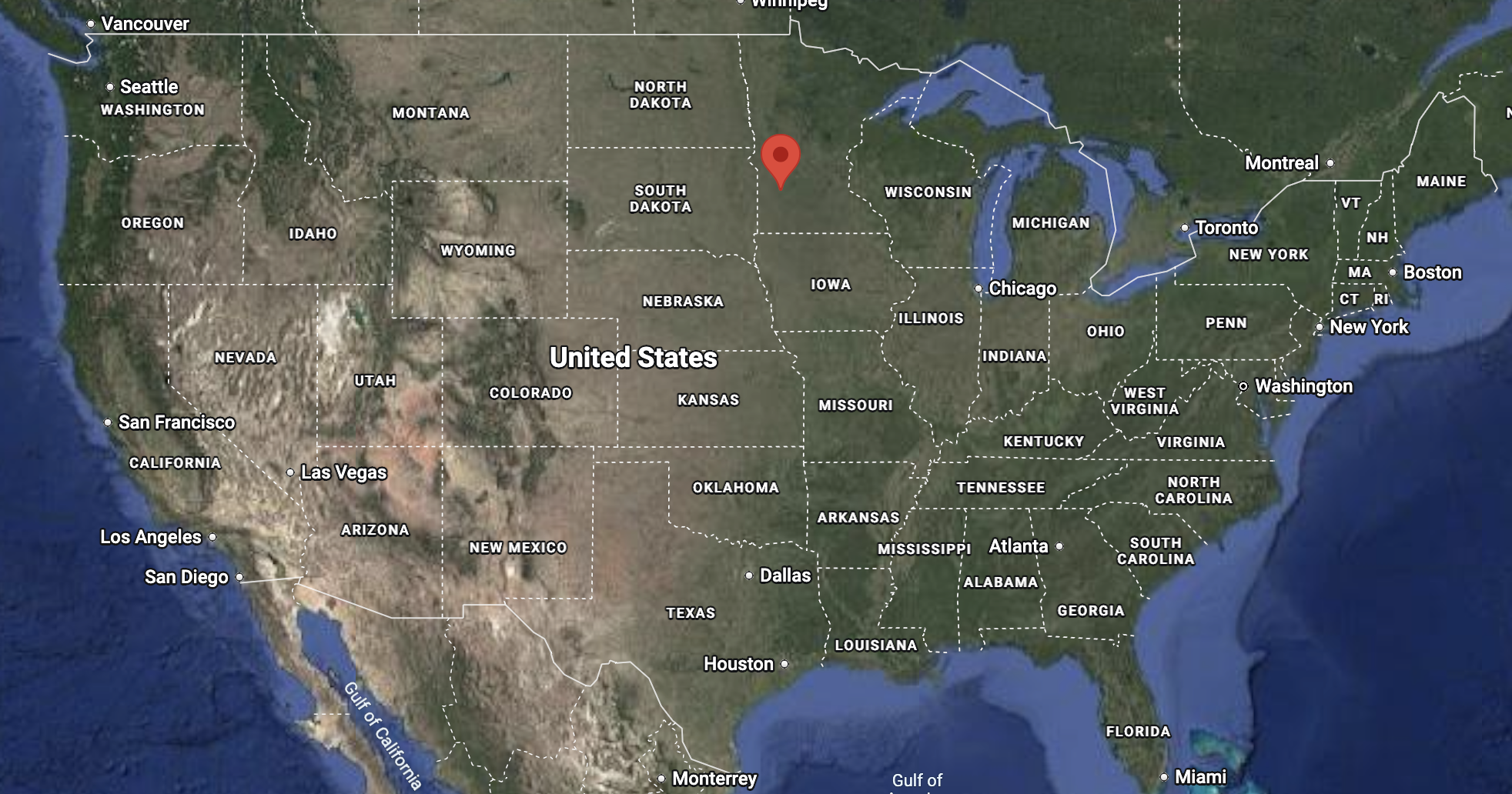
For folks outside of the USA (and maybe for some inside the USA), Minnesota is in the north-central United States. It’s a land straddling dark forests to the north and east, and the Great Plains to the south and west. Granite Falls is found in that second region, prairies, farm fields, and the occasional patch of woodland.
This area is not great for finding rocks. Glacial activity and soil growth have buried the ancient bedrock deep under loose sediment. But there is one savior out here on the plains, a force of nature that reveals the hidden world below. I’m talking about the Minnesota River.
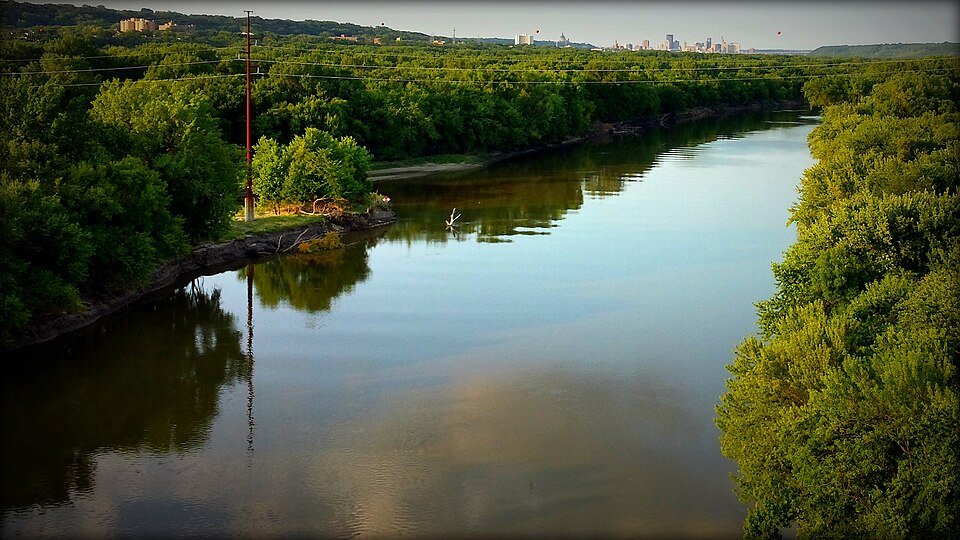
The river was once much wider, deeper, and more powerful, bursting from dams in glacial lakes during the Ice Ages, just a few thousand years ago. Those pulses carved down through the soil, exposing the ancient bedrock beneath along the riverbanks. You can now see why the town of Granite Falls got its dramatic name. Those rocky cliffs and streambeds lie along the Minnesota River, and so does that boastful sign: World’s Oldest Rock.
However, Granite Falls is not the only place to feature these geezers. Along the upper Minnesota River, you’ll see towns from Montevideo to Morton with their own pockets of the same rock. In fact, Morton has the last laugh over Granite Falls: the official scientific name for these rocks is the Morton Gneiss. Hopefully I haven’t started a small-town feud with this information.
The sign in Granite Falls is a handy marker, close to a county museum, but it belies a much larger expanse of ancient stone below western Minnesota.
So what is this rock, and how old is it?
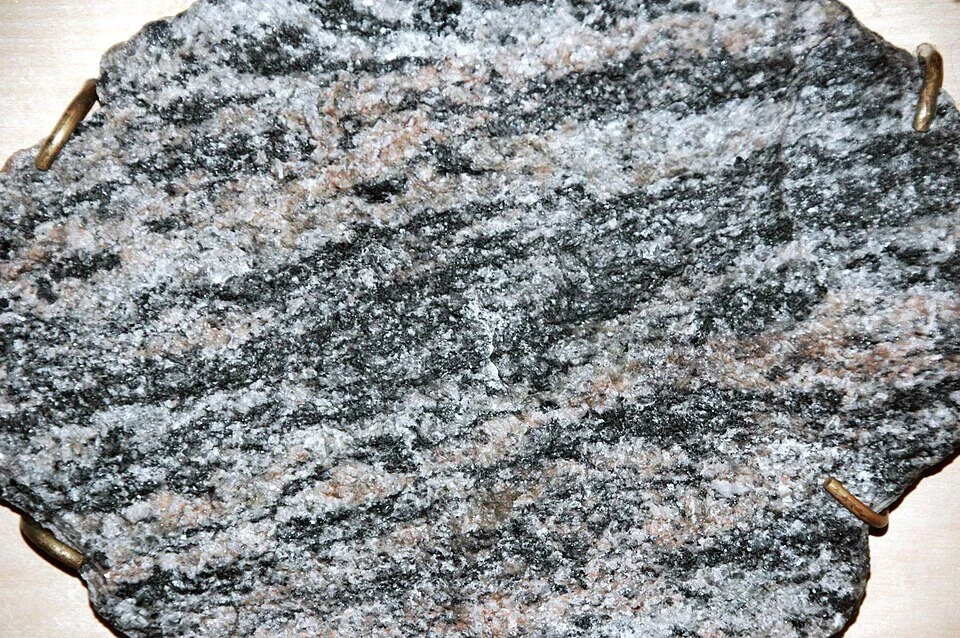
Morton Gneiss, from southwestern Minnesota
As I mentioned, this rock is called the Morton Gneiss, that’s spelled G-N-E-I-S-S, not nice. The rock gneiss is an old friend of the show, but if you’re a newcomer, here’s the lowdown.
Gneiss is a beautiful rock, defined by twisting irregular stripes like a zebra or tiger. The Morton Gneiss has chaotic bands of pink, black, and gray. It almost looks like a melted Neapolitan ice cream with chocolate, vanilla, and strawberry swirling together. It’s a distinctive, captivating rock, used in many buildings around the nation. But if the Morton Gneiss wasn’t made by melting ice cream, how did it form?
Gneiss is a metamorphic rock, forged when other types of rocks are pressure-cooked deep, deep underground. If you squeeze a stone hard enough, it will transform into something completely different, it will transform into gneiss. Which begs the question, what was the original rock that became the striped Morton Gneiss?
The quick answer, but slightly wrong answer is: granite, just like Granite Falls.
If you look at a slab of Morton Gneiss, it looks like a tortured, twisted granite countertop. Granite forms when molten magma slowly cools and crystallizes underground, like a giant hot pocket. If someone on the street asks you about the oldest US rock (as I’m sure happens every day), you can tell them it’s a twisted, pressure-cooked granite, and you’re basically right. You have my blessing as a geologist to tell that story.
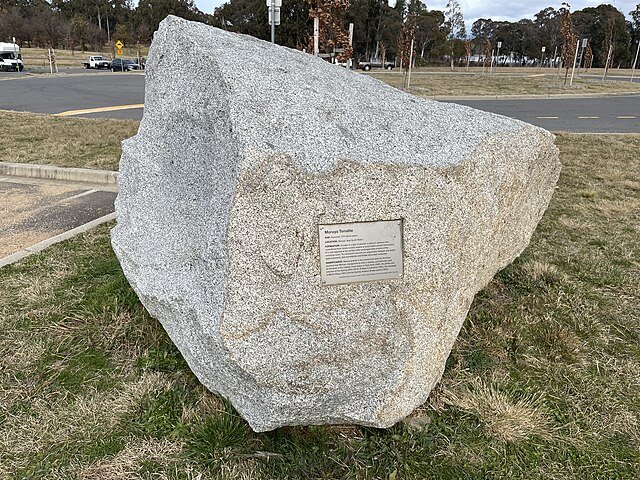
But if you want to be technically right, here’s the real answer: the original rock was called a tonalite. Tonalite is a cousin of granite: both form in magma chambers deep underground. There’s a family resemblance, but if granites are like Neapolitan ice cream (pink, black and white), tonalites are more Cookies and Cream, less pink, more black and white.
We’ve talked about tonalite several times, they’ve shown up in every location of Season 2. The oldest rock on Earth is a tonalite gneiss, the Acasta Gneiss from Episode 26. But let’s return back to Minnesota. Now that we know what the Morton Gneiss is, how old is it?
That answer has changed over the years, as dating techniques have improved. If you’re new to the show and want to learn how geologists date rocks, please check out Episode 3: The Dating Game. Here’s the quick summary. The element uranium slowly turns into lead at a known rate, just like sand in an hourglass. The more lead in your rock, the older it is.
That’s how we date rocks today. But in previous decades, geologists had to use other pairs of elements: potassium and argon, rubidium and strontium. Same technique, different elements, which had their own pitfalls, which we’ll save for a future episode. As each new technique emerged, one man kept returning to the Morton Gneiss over the decades, measuring and remeasuring dates.
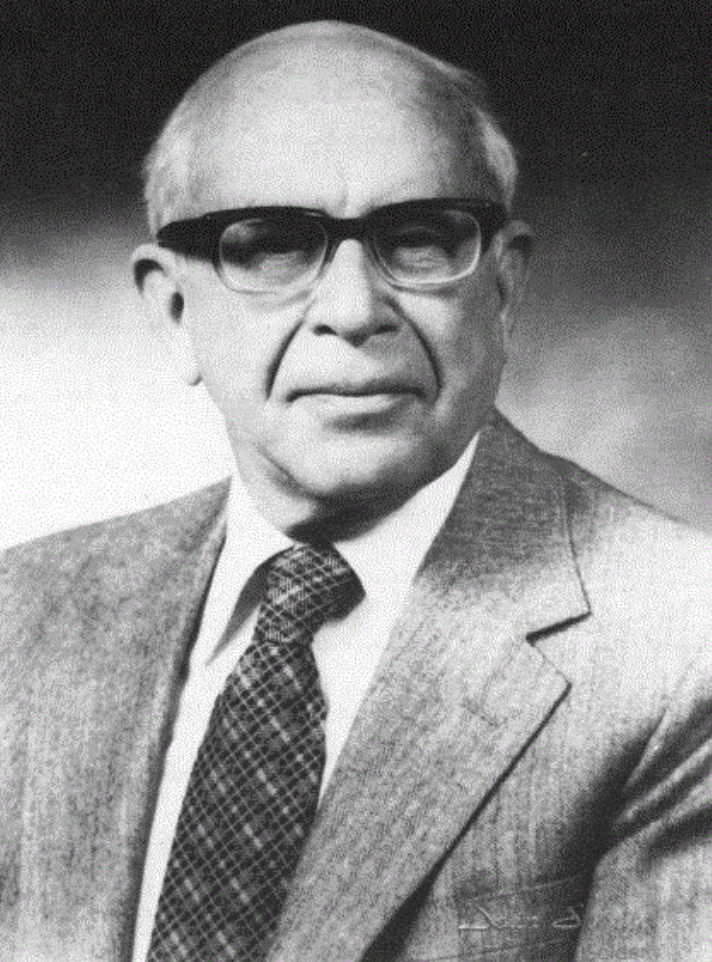
Dr. Goldich, dater of the Morton Gneiss. From Morey & Hanson, GSA Special Papers, 1980
That stubborn man was Dr. Samuel Goldich, who worked at a variety of colleges such as the University of Minnesota and Northern Illinois University. Goldich has a long history that wemust skip for now, but he developed pivotal ideas on how rocks break down, and helped gather aluminum for WWII. He apparently had an abrasive personality that was noted even in positive obituaries. To paraphrase: “he left an ill will with many, which accounts for him not winning more scientific honors. But there were a lot of us that learned to overcome Sam’s outbursts”. Ouch. Again, that’s from a kind obituary.
But it was that same doggedness that kept bringing Goldich back to the Morton Gneiss. In 1956, he measured an age of 2.4 billion years old, mid June on the great Earth Calendar. We now know that’s much too young, and he returned in 1974 to measure 3.8 billion years old, early March. We now know that’s a bit too old, but the next year, that age of 3.8 billion was printed on a metal sign proclaiming Earth’s Oldest Rocks, outside granite falls. You’ll see the age still there today.
But as time went on, more accurate dates centered on 3.5 billion years old, March 26.Technically in Season 3, but that’s still very very old. And the Minnesota rocks, the Morton Gneiss held that title of the oldest rocks in the USA for decades. Until new challengers appeared.
Part 2: Wyoming
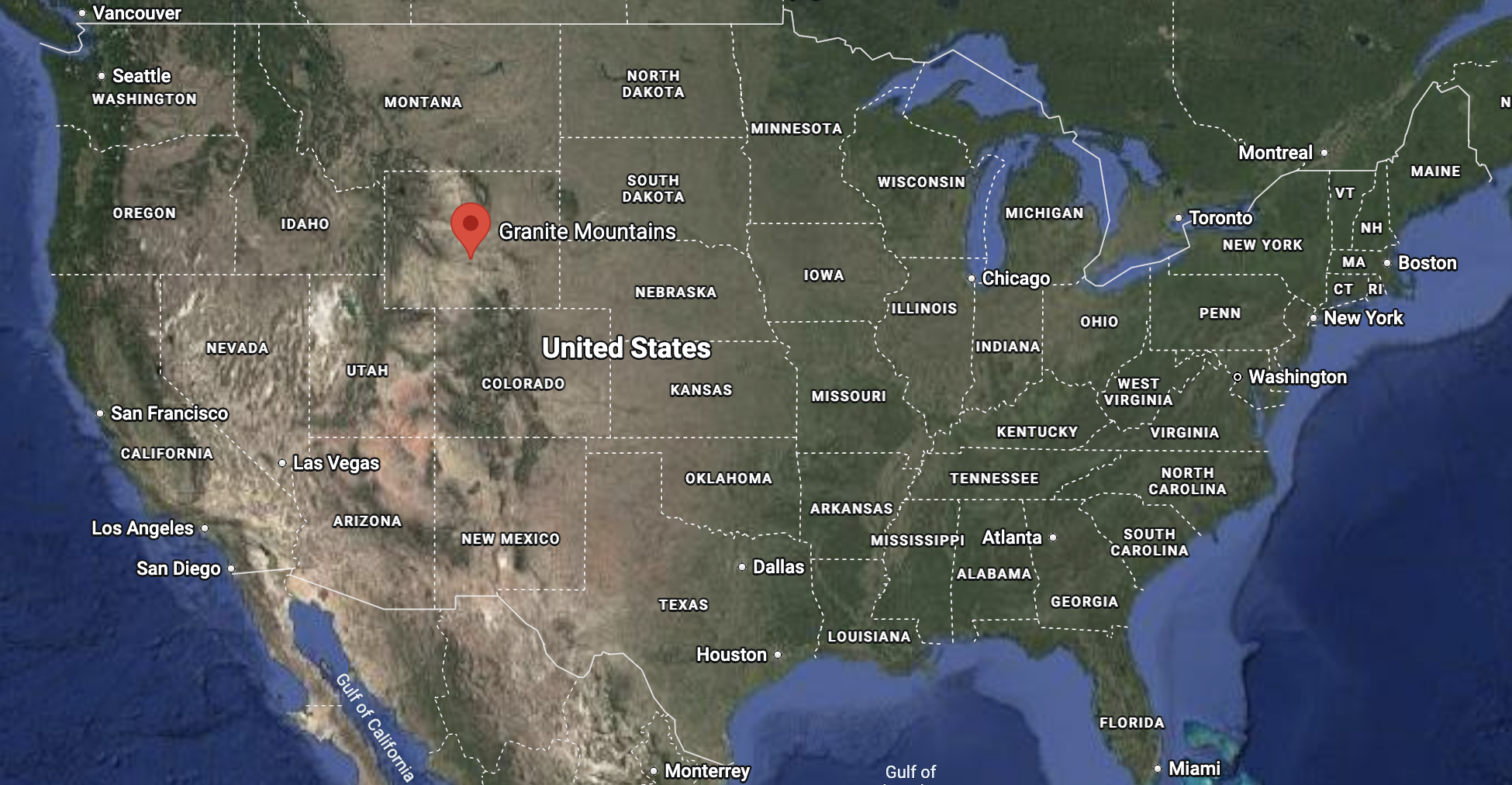
For our second candidate, let’s zoom out again, to the big map. Wyoming is in the west-central United States. To the east are the Great Plains, the same plains we left behind in Minnesota. To the west lie the Rocky Mountains, the purple mountains majesty above the fruited plain. The Rockies are not one straight line of peaks, but a complex network of smaller ranges and dividing basins. One of these subranges is called the Granite Mountains, a remote land of low peaks and rolling scrubland. The few communities today have populations of a few dozen. Still, you can drive here by car, which is more connected than any location before this episode.
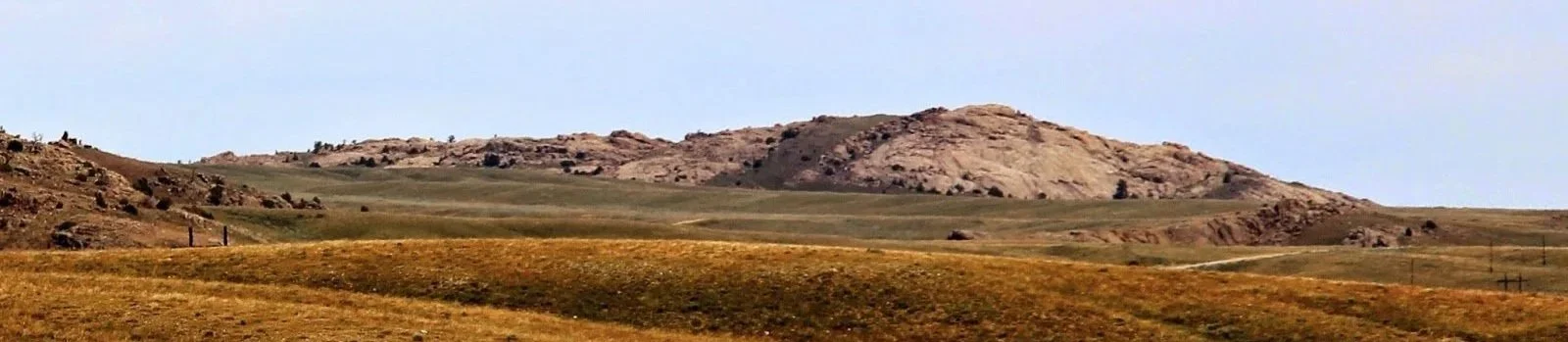
The Granite Mountains of Wyoming. Credit to Hollis Marriott
While we’re zoomed out on the map, I want to show you the weirdness of Wyoming compared to our previous Season 2 locations. Let’s strip away the plants and dirt, and just look at the bedrockof North America. For reference, there’s a map on our website: bedrockpodcast.com.
The oldest rocks on North America form a broad, extensive horseshoe shape around Hudson Bay. This feature is called the Canadian Shield, and it’s been our home for all of Season 2. The Acasta Gneiss? Canadian Shield. Quebec? Canadian Shield. Greenland? Close enough, it would have been connected. Even the Morton Gneiss in Minnesota is part of the great Canadian Shield, where it briefly dips south into the USA.
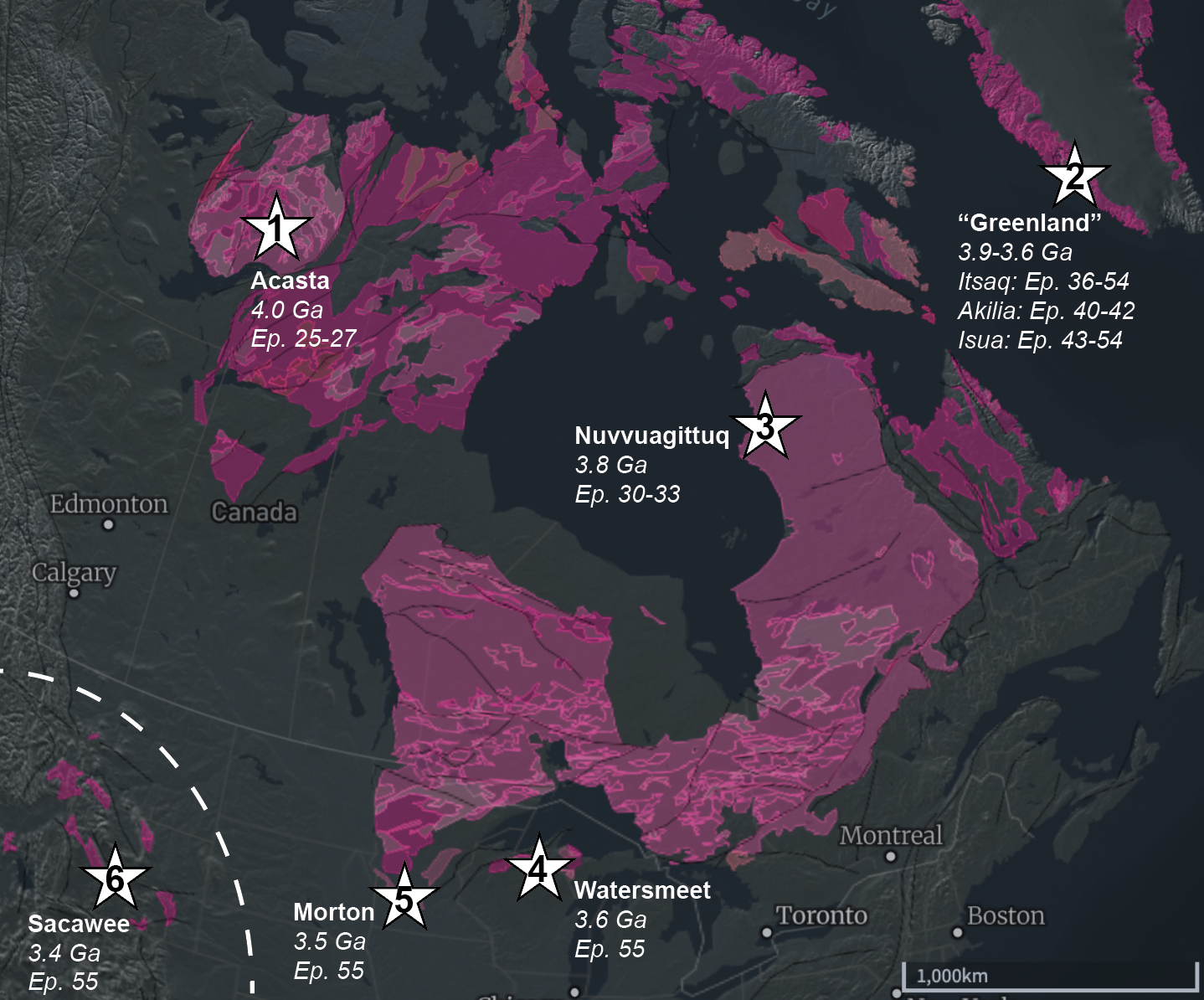
Season 2 locations with ages and episodes. Starred numbers: rough chronology. Note how separate Wyoming (6) is from the Canadian Shield (1-5). Geologic map from macrostrat.org, modified by Dylan Wilmeth, 2026.
But Wyoming is a different animal. These rocks are separated from the Canadian Shield by hundreds of miles, a lonely archipelago of ancient stone surrounded by younger plains and mountains. Billions of years ago, Wyoming was once a separate micro-continent. Just how separate is up for debate, but in a future season, we will see Wyoming collide with Canada and start to build North America as we know it. Wyoming is our first step into the wider world of Season 3, beyond the Shield.
Finally, let’s zoom into these western rocks and compare with Minnesota. The Minnesota rocks sit in a wide river valley, while the Wyoming rocks sit in low, rolling mountains. The locations are very different, but what about the stones?
If we place the Morton Gneiss next to our new contender… they would look identical, with chaotic zebra stripes of black, white, and pink. Both rocks are gneisses, twisted and tortured deep underground. Both rocks were originally tonalites, those speckled cousins of granite, forged in magma chambers. The Wyoming sample is called the Sacawee Gneiss.
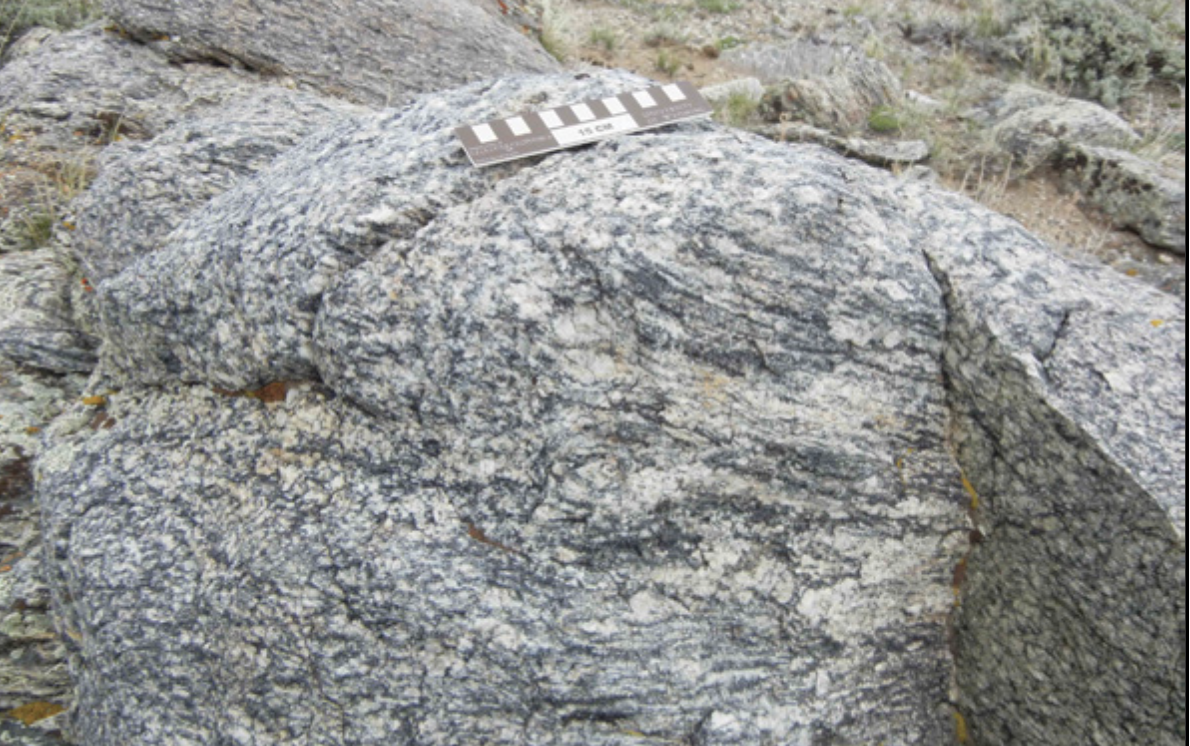
The Sacawee Gneiss, in the Granite Mountains of central Wyoming. From Frost et al., 2016, GSA Bulletin

Dr. Carol Frost, dater of the USA’s oldest rocks
At least we don’t have to describe a whole new rock! So let’s see how old this new contender is. The Sacawee Gneiss was recently dated by Dr. Carol Frost at the University of Wyoming in Laramie, about three hours down the road. For a short bio, Dr. Frost got her PhD at Cambridge in 1984 and has worked in Wyoming ever since. She’s been division director at the National Science Foundation and the British Geological Survey. In short, an impressive career, and this episode is largely based off her recent work.
Dr. Frost’s expertise is in ancient crust, so Wyoming is a great playground. Let’s see what she found. She dated the Sacawee Gneiss around 3.4 billion years old, April Fool’s Day. For context, that’s 100 million years younger than our Minnesota samples, which are 3.5 billion years old or March 26. So why are we even talking about Wyoming?
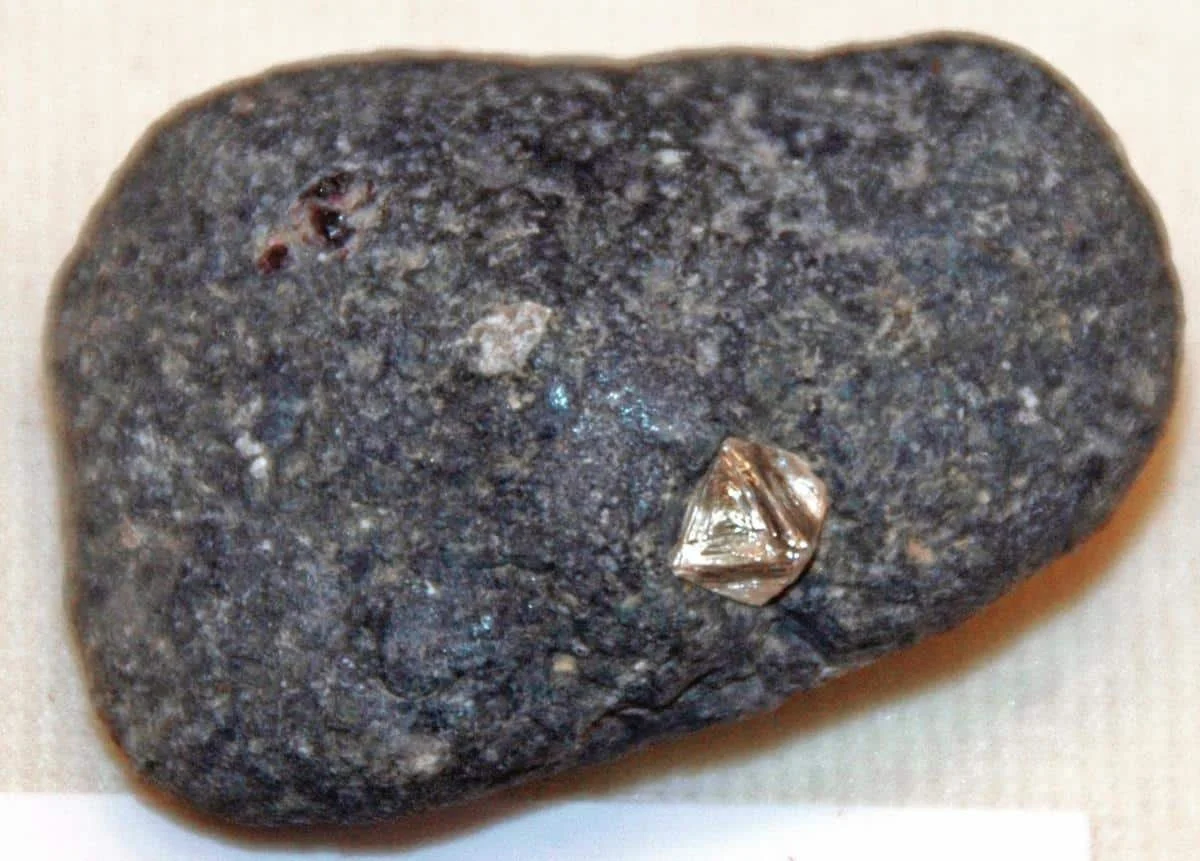
Because hidden inside these younger rocks are fragments of much older ones. Let’s start by rewinding 3.4 billion years ago, when the Sacawee Gneiss was born. We’re sitting deep underground in a boiling magma chamber. This magma is cutting through the surrounding rock like a hot knife through butter. The surrounding walls slowly melt into the red-hot goop. But these rocks don’t melt all at once. Some crystals are tougher than others, and can linger for a while in magma, like the One Ring in the fires of Mount Doom. If those tough crystals can hold out long enough, they will survive as the magma cools into a new stone.
In short, these tough crystals are hitchhikers from one rock into another. In 2017, Carol Frost discovered some of these crystal hitchhikers in the Sacawee Gneiss. These crystal ages were much older, 3.8 billion years old or March 3. So while the Sacawee Gneiss is “only” 3.4 billion, it has captured pieces of an even older world. Perhaps one day we’ll find those older rocks on another Wyoming mountainside. If so, they would be the USA’s oldest rocks, hands down. But until then, the search continues…
Part 3: Michigan
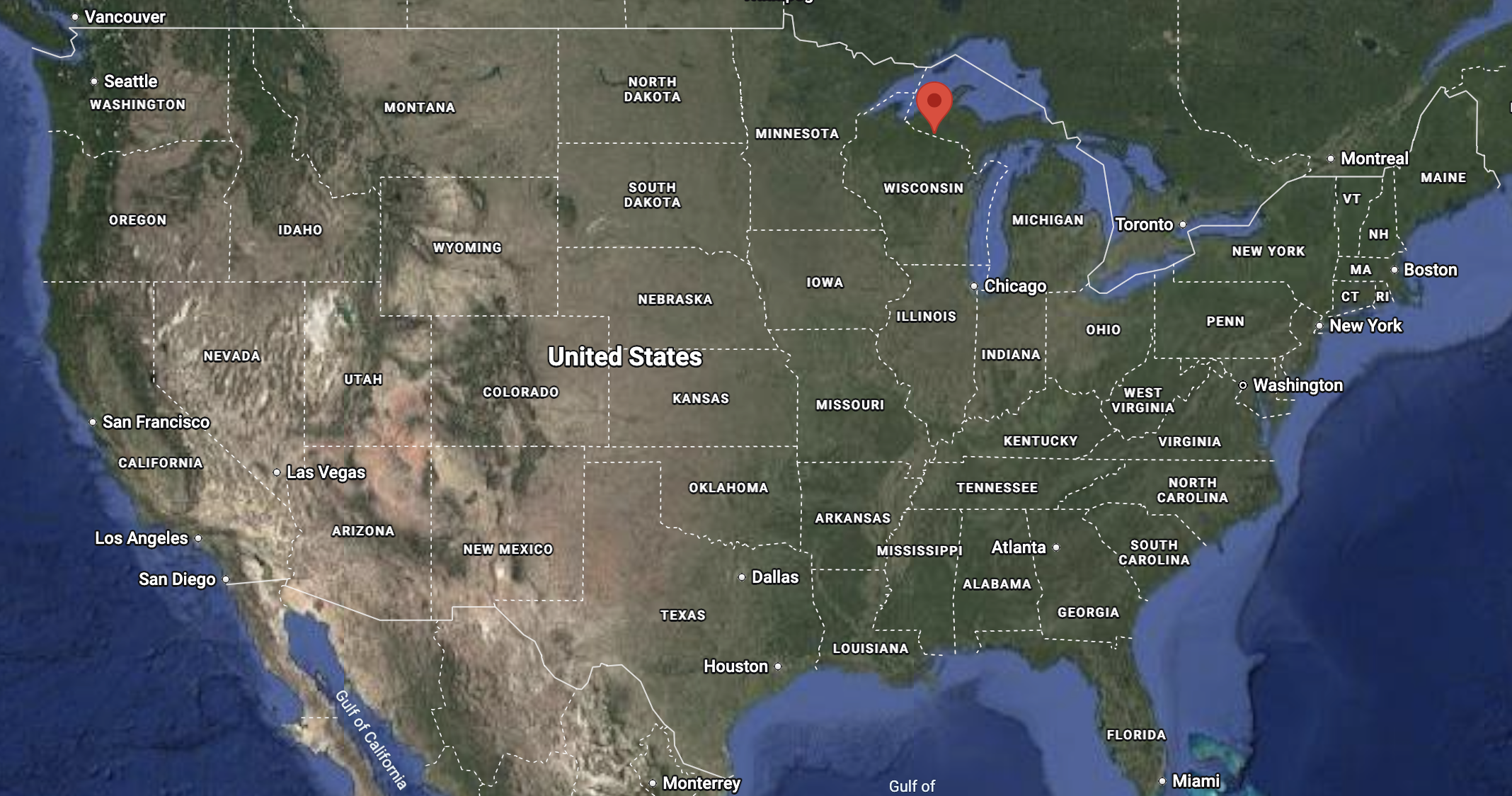
For our third contestant, we zoom out one last time to the big map. We travel back east, past Minnesota to Michigan, a close neighbor. Michigan is also in the north-central US, surrounded by the Great Lakes. These lakes divide Michigan into two separate regions. The southern portion, where I currently live, is affectionally called “The Mitten” for its unique shape. The northern portion is less creatively called the Upper Peninsula, or the “U.P.” for short. The Upper Peninsula is this episode’s final destination.
The UP is one of my favorite places on Earth. Dense pine forests open onto pebble beaches, huge dunes, and sandstone cliffs overlooking lakes that stretch to the horizon. Here is where I first saw truly ancient rocks, 1 billion years old. Here is where I took my first research students into the field, 2 billion years old. The UP has truly changed my life, and we’ll see these locations in much later seasons, but today, we look at even older stones, ones I’ve never seen before.
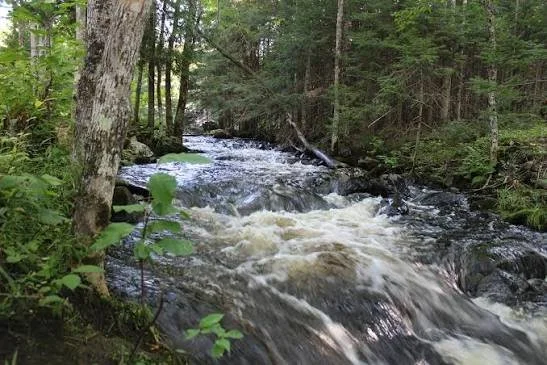
Like western Minnesota and Wyoming, the UP is a relatively remote corner of the USA. In the western half of the peninsula sits the small town of Watersmeet, population 1,456. Smaller than Granite Falls, larger than anything in the Granite Mountains. Watersmeet is deep in the Northwoods, far from the Great Lakes shorelines, but still surrounded by streams and smaller lakes, hence the name.
On the geologic map, we are once again on the great Canadian Shield, the same huge, ancient slice of continent as the Morton Gneiss in Minnesota. The UP sits on the southern fringe of the shield, and has far more in common with Canadian geology than lower Michigan. Also like Canadian geology, this means most of the rocks are smothered in dense pine forest. Finding bedrock here is like playing Battleship or Whack-a-Mole, trudging through miles of mosquito-infested wood to find one or two lonely boulders.
When we find these forest boulders, what would we see? The exact same rocks as the Minnesota rivers and the Wyoming mountains: zebra-stripes of black, white, and pink. Tonalite gneisses, born in magma and squeezed deep underground. These samples are called the Watersmeet Gneiss, named for the town. It’s not really a coincidence to see all these tonalite gneisses. Long-time listeners will be nodding along, we’ve seen tonalites across Canada and Greenland. They’re basically the mascot of Season 2.
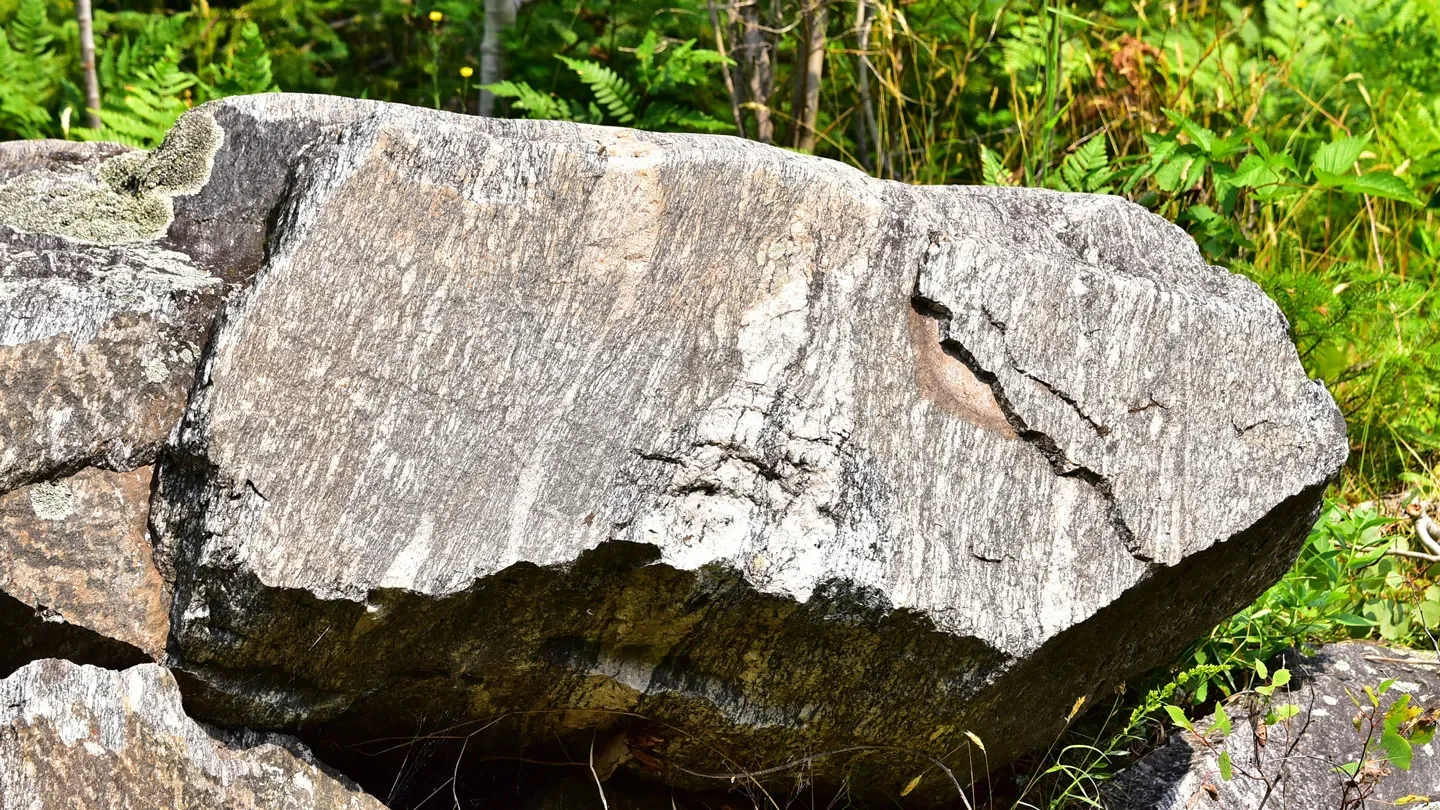
The Watersmeet Gneiss, Michigan’s Upper Peninsula.
Again, this means we can dive straight into the ages. Ever since the 1980s, geologists knew the Watersmeet gneisses were very old. But in 2025, Carol Frost and her team provided new dates, and upset a half-century long record. Let’s line up our contestants in a row. The Watersmeet Gneiss in Michigan is 3.6 billion years old, 3.62 to be very precise. That’s March 17. In contrast, the Morton Gneiss in Minnesota, the long-reigning champion, is 3.5 billion years old, March 26. Finally, the Sacawee Gneiss in Wyoming is 3.4 billion years old, April 1.
Frost’s study was released in 2025, in the Geological Society of America Bulletin. The paper has made waves in regular news outlets, perhaps you’ve already heard the story! They’re the oldest rocks in the USA, for crying out loud. The paper itself is one of the clearest, readable scientific articles I’ve read in a long time. I’ve put a link in the episode description, even if you’re not a geologist. It’s a short read, just three and a half pages plus figures. Today’s episode was mostly based on the Frost paper, and I’ve been excited to tell this story for a while now.
A final thought before wrapping up. This episode was a nice palate cleanser after months hanging around Greenland. But it’s also a nice transition into the next season. Season 2 was concentrated around the Arctic Circle: Canada and Greenland. Season 3 will expand across multiple continents. These USA rocks are our first expedition into this wider world. As we expand, we will not be able to cover every single location in detail. Today, we sped through three states, and I can only keep up that pace for so long. So today’s episode showed us the double-edged sword that lies ahead: so many rocks, so little time. I’m looking forward to evolve the show to fit this new world, and I’m excited to take you with me.
Summary
The oldest rock in the United States of America is in Michigan’s Upper Peninsula, near the small town of Watersmeet. The Watersmeet Gneiss is 3.62 billion years old, March 17 on the Earth Calendar, the very end of the Eoarchean Era. The rock was born in a magma chamber deep underground, likely below a volcano. Over many eons, the rock was then twisted and gnarled into beautiful zebra stripes of black and white. Similar events were happening in other isolated locations, such as the Morton Gneiss in Minnesota and the Sacawee Gneiss in Wyoming. For 50 years of research, the Morton Gneiss was considered the USA’s oldest rock. Michigan may have knocked Minnesota off the throne for now, but who knows what the next few years will bring. Wyoming tells us that far older rocks might be waiting if we look in the right place.
And that’s a wrap for Season 2, the Eoarchean!
We’ve come a long way from the meteorites and tiny crystals of Season 1. We’ve had actual Earth rocks to investigate, the oldest rocks on Earth. They’re still few and far between, but they’ve taught us much. Now, when you look at the Man on the Moon, the graphite in your pencil, or an object made of iron, you’ll know how it got there.
Instead of recapping everything we’ve learned right now, I’ll post a summary episode soon. For the next few weeks, I’ll be taking a break as I move to Minnesota and start my new job. I’ll only be an hour away from the Morton Gneiss, so maybe I’ll do a live recording!
As always, thank you for listening this past year, with all my ups, downs, and pauses. You’re the best audience in the world, and I wouldn’t be doing this without you. Stay tuned in a few weeks when we begin Season 3, 3.6 billion years ago and finally leave North America.